From a water-powered mill to your kitchen.
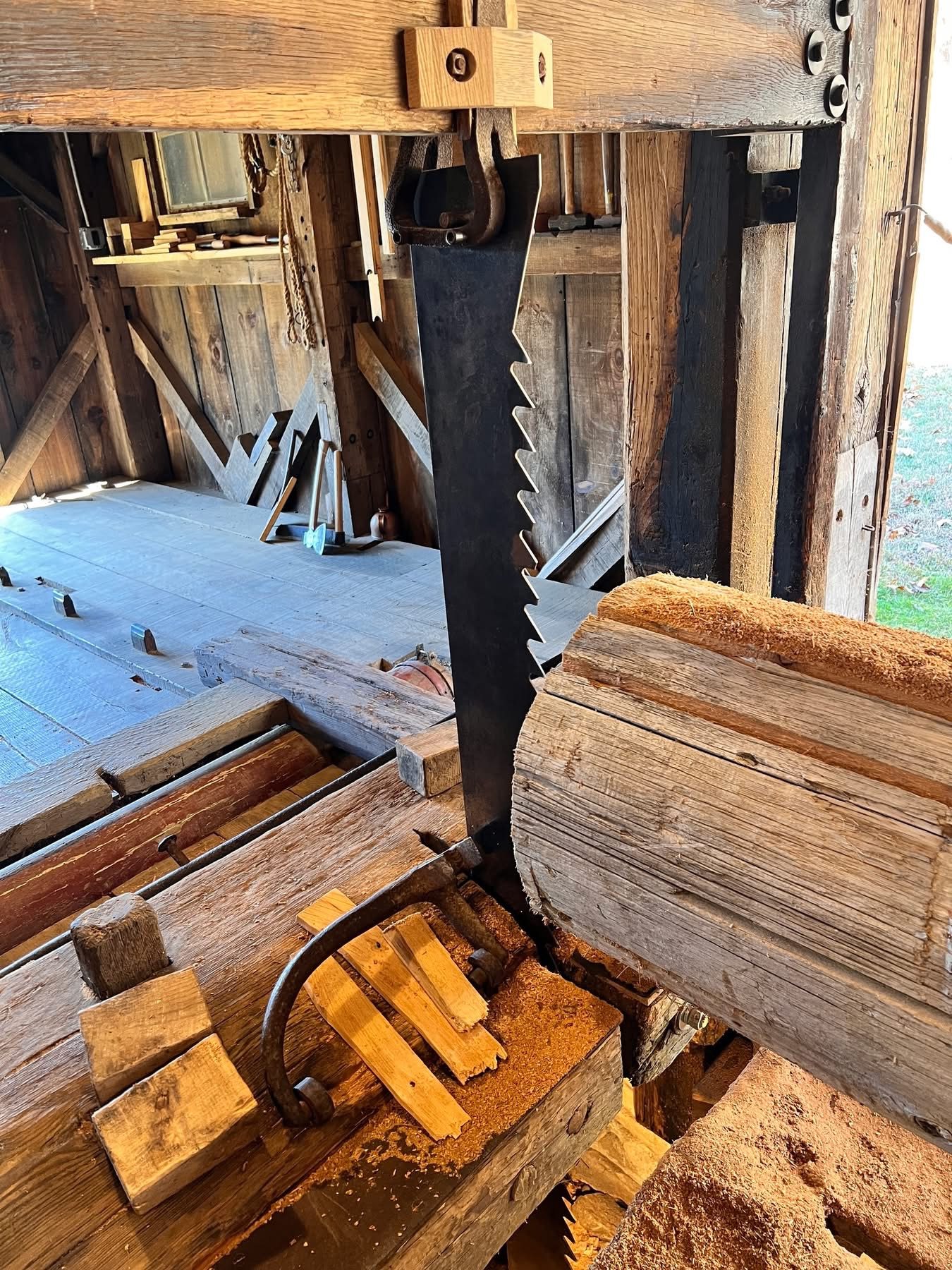
Some of my wood comes from the Ledyard Up-Down Sawmill, a 19th-century mill in southeastern Connecticut that still saws logs with the power of a running brook.
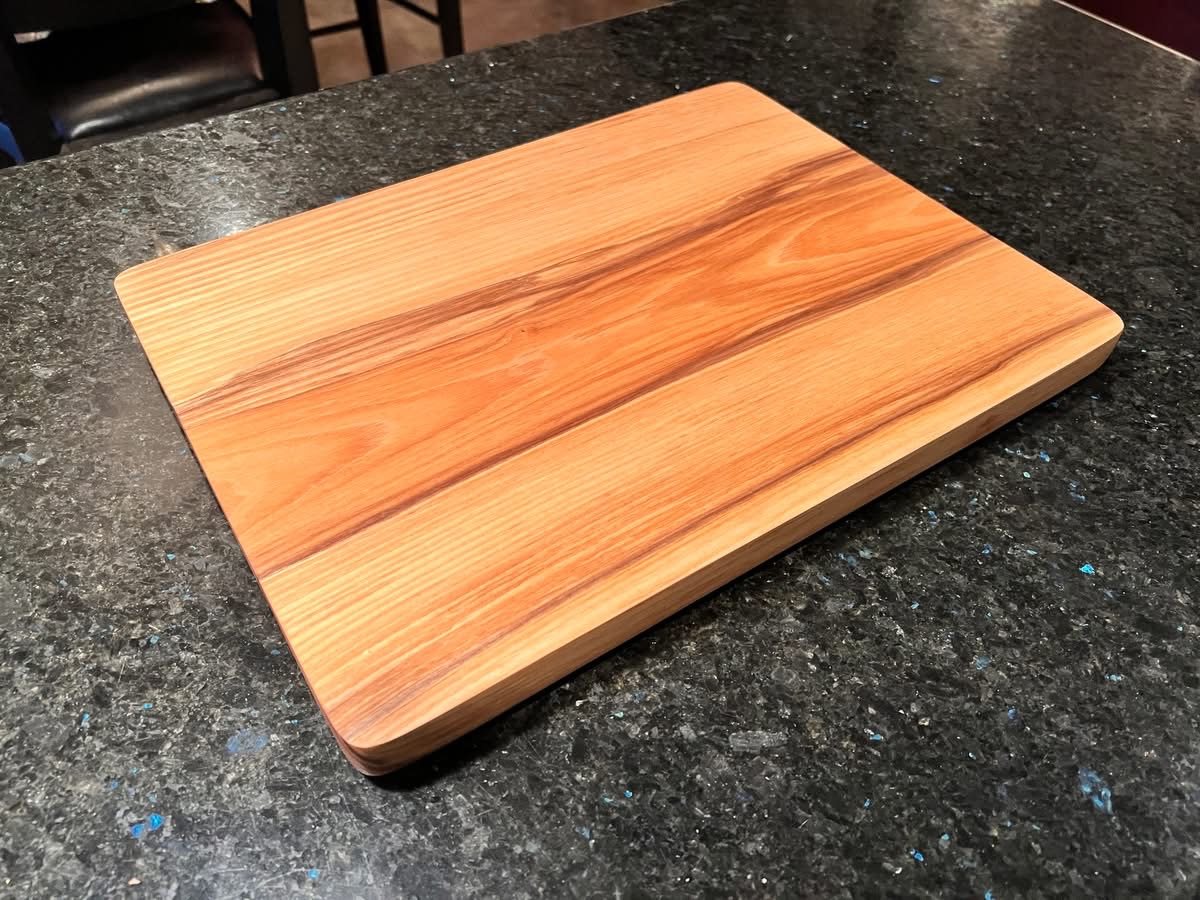
No glue. Nothing artificial. Just one beautiful piece of ash.
A customer right here in Ellington asked for something special: an all-natural cutting board with no glue at all. Most cutting boards are strips of wood glued together. This one had to be a single, solid piece.
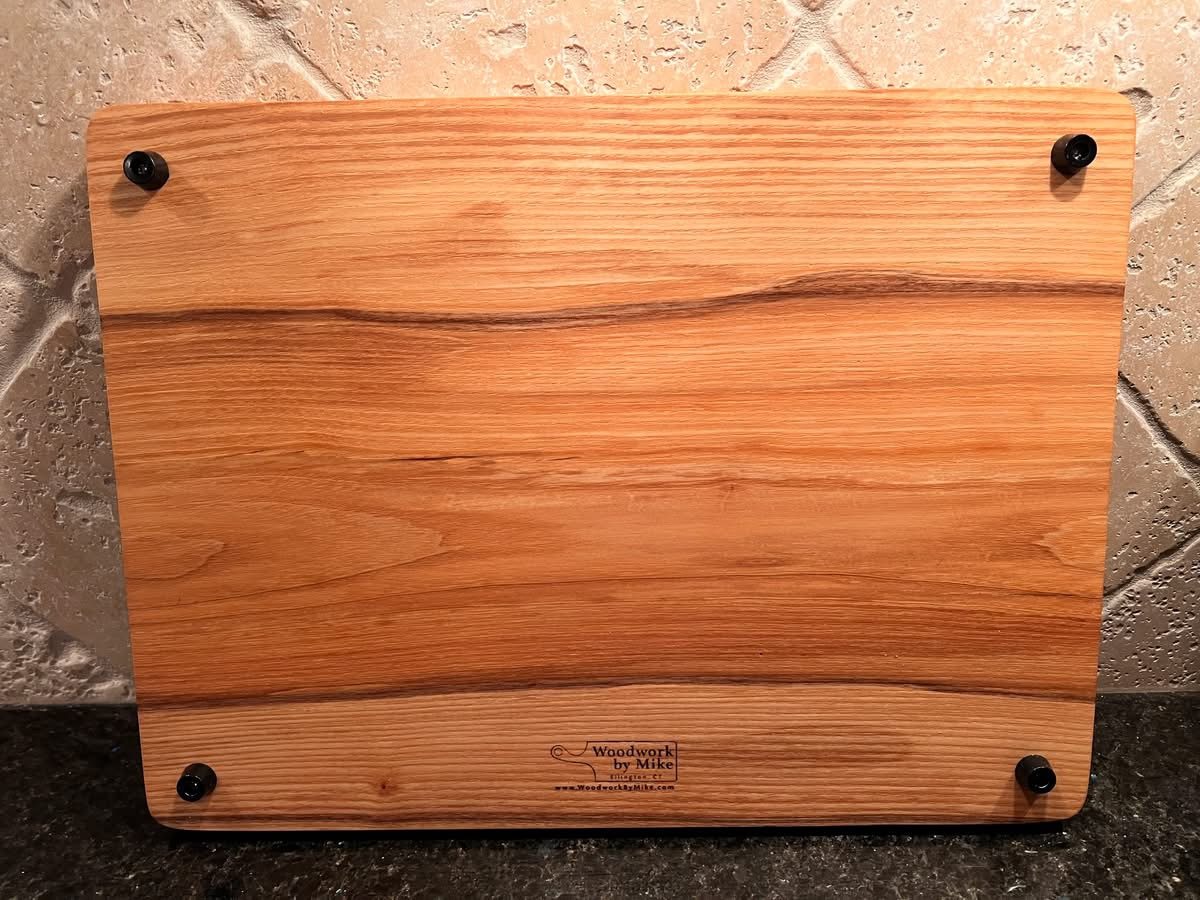
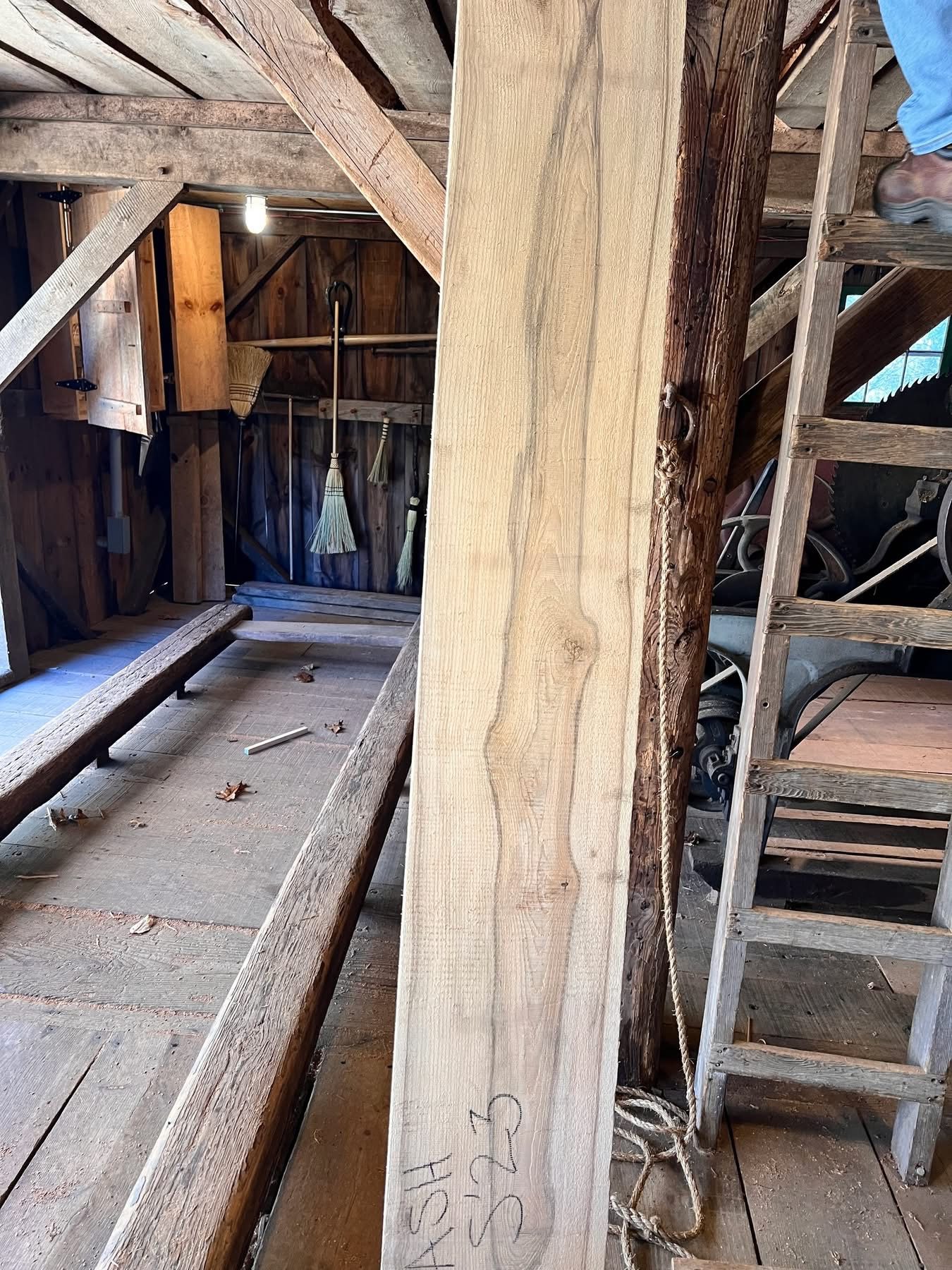
So I went to the source. The ash came from the Ledyard Sawmill, cut from a log on a water-powered mill, and became one wide, clear board with rich dark streaks running through the grain. You can see the actual plank, marked at the mill, further down this page. Every line you see is the tree itself.
[Finish — e.g. food-safe mineral oil and beeswax, or whatever natural finish you used.]
Where the board began
The Ledyard mill runs an up-down sash saw: a straight iron blade stretched in a wooden frame that rises and falls, driven by water. It chews through a log slowly, one stroke at a time, the way lumber was cut for generations. Watch it in action below.
A family mill on Lee's Brook
Like so many small New England streams, Lee's Brook once turned the wheels of several mills. This one outlasted nearly all of them.
Albert Brown builds up a farm on Lee's Brook. Like many farmers of his day he had side trades: wheelwright, house builder, and mills on his land.
His son Israel restarts his late father's sawmill. By 1880 it runs a circular saw driven by a cast-iron Tyler water turbine.
Israel passes the mill to his brother Aaron. After a foreclosure, it goes to the Main family, relatives on his mother's side.
Harry Main inherits the mill and makes repairs, but it never runs again as a commercial mill.
The Ledyard Historical Society works to save it from the fate of the thousands of sash mills that once lined New England streams.
The Town of Ledyard buys the property from Harry Main for $12,000.
After years of volunteer work on the floors, roof, dam and races, and saving most of the original saw works, the mill reopens.
Ash from the mill becomes a one-piece cutting board for a neighbor in town.
My Delta saw is built.
Two old machines, one moment in time
In 1937 and 1938, while Harry Main was patching up the old mill on Lee's Brook, Delta was building my saw in Milwaukee. That's the same Tilt-Top saw and jointer I rescued for fifteen dollars and restored.
Nearly ninety years later, the two meet again. The mill cut the log; my old Delta squared and trued the board. Both machines were saved by people who didn't want to see good iron go to scrap.
Read how I restored the saw →Good old technology
No computers, no plastic, no shortcuts. Just machines built to be fixed instead of thrown away, and skills passed from one set of hands to the next.
The mill needs no power plant. A dammed pond and a turbine turn a brook into the force that saws a log.
Heavy cast iron and forged steel, from the mill's saw to my Delta's table. Built once, built right, still working.
Reading the grain, choosing the board, shaping and finishing it by hand. The part no machine can do.
Visit the mill
The Ledyard Up-Down Sawmill is run by volunteers and opens to visitors in spring and fall, when you can watch the old saw at work.
Plan a visit at ledyardsawmill.org →Want a one-piece board?
All natural, no glue, and a story behind every one. Ask about custom orders.